
Steel expansion joints from STENFLEX and others
– Robust solutions in stainless steel
Industrial production and piping systems place high demands on flexibility, temperature resistance and long service life. Our STENFLEX steel expansion joints are tailored to meet these demands, with guaranteed operational reliability and precision.
At HNC Group we offer the entire standard range: diameters from DN 15 to DN 5500 mm in pressure ratings up to PN 16, as well as tailor-made special designs. STENFLEX steel expansion joints are built to withstand demanding conditions in power plants, chemical plants, marine installations and the process industry – and they require minimal maintenance.
Areas of application
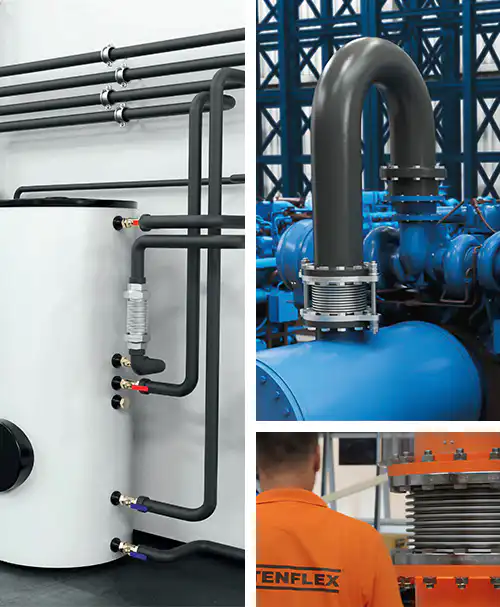
Steel expansion joints are typically used in:
Why choose steel expansion joints from STENFLEX?
STENFLEX has more than 50 years of experience and supplies steel expansion joints with high operational reliability, based on advanced CAD design and testing processes.
Here are some of the most important benefits:
Installation and operation – best practice
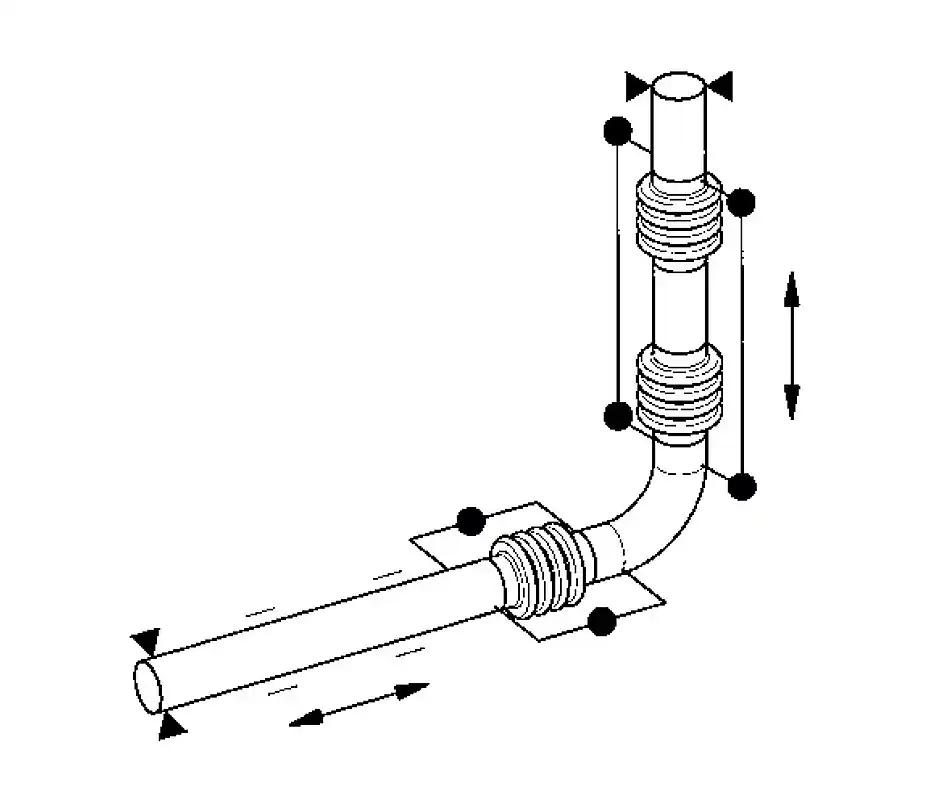
For correct and long-lasting operation, the following guidelines should be observed:
“Contact us for technical guidance or a quotation for steel expansion joints.”
Call us on 7013 2300

SA-10
Axial expansion joint
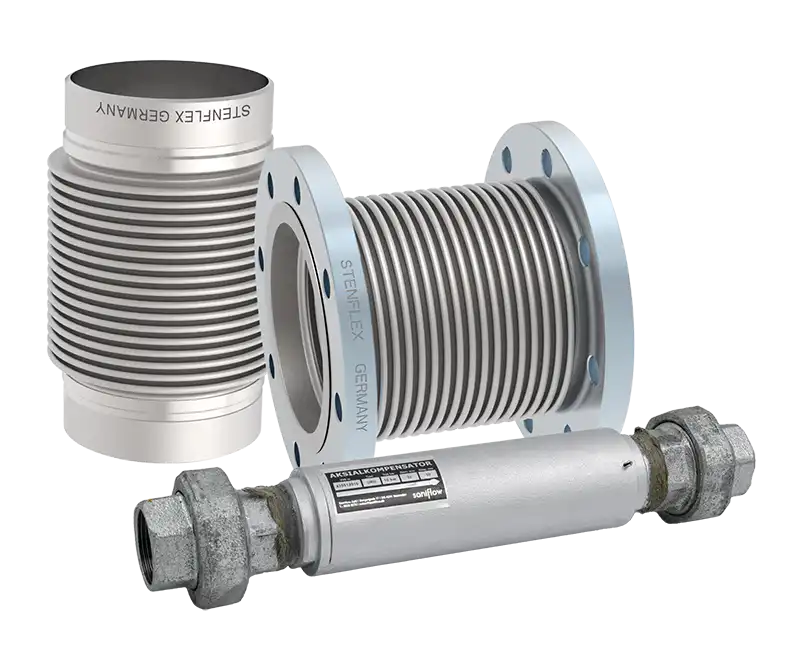
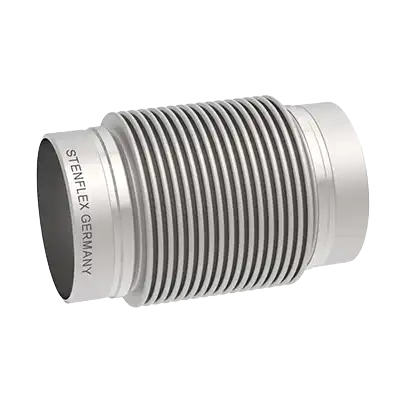
Steel expansion joint, also for vacuum, made with stainless steel bellows and weld ends.
| Design: | Weld ends |
| Standard dimensions: | DN 15 – DN 2800 |
| Max. working pressure: | PN 16 |
| Materials: | Stainless steel |
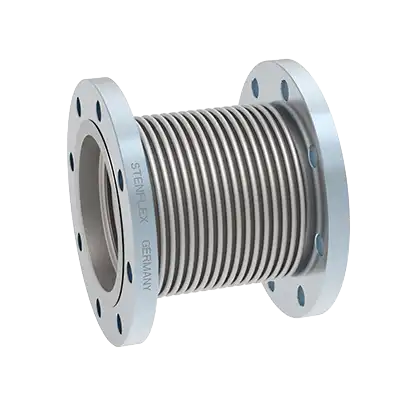
SF-10
Axial expansion joint
Axial expansion joint consisting of stainless steel bellows and loose flanges.
| Design: | Swivel flanges |
| Standard dimensions: | DN 15 – DN 2800 |
| Max. working pressure: | PN 16 |
| Materials (Bellows): | Stainless steel |
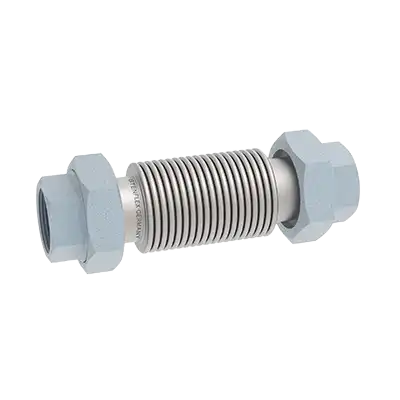
SG-11
Axial expansion joint
Vacuum-tight steel expansion joint consisting of stainless steel bellows and threaded connection pieces Bellows with flared ends, connection parts with union and sealing face. Unions with female thread.
| Design: | Galvanised unions with sockets |
| Standard dimensions: | DN 15 – DN 50 |
| Max. working pressure: | PN 16 |
| Materials (Bellows): | Stainless steel |
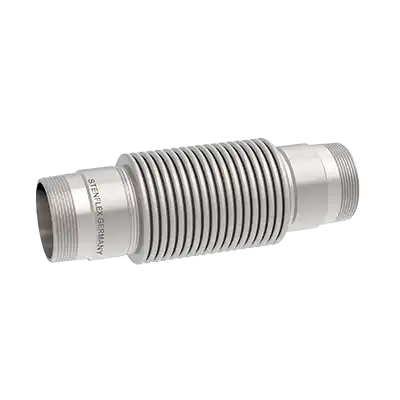
SG-10
Axial expansion joint
Vacuum-tight steel expansion joint consisting of stainless steel bellows and threaded connection pieces. Bellows with flared ends, connection parts with male thread.
| Design: | Nipples |
| Standard dimensions: | DN 15 – DN 50 |
| Max. working pressure: | PN 16 |
| Materials (Bellows): | Stainless steel |
A steel expansion joint is a flexible component, normally made of stainless steel, used to absorb movements in piping systems. It compensates for thermal expansion, pressure variations and vibrations, which prevents damage to the piping system. Steel expansion joints are suitable for industrial applications, including power plants, chemical plants and HVAC systems, where a reliable and flexible pipe connection is essential.
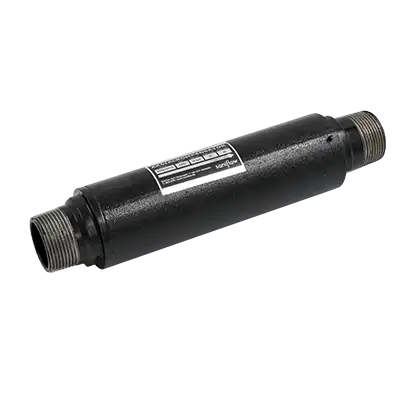
Max-Comp
Axial expansion joint
Max-Comp is particularly suitable for larger axial movement. Supplied pre-tensioned, ready for installation in a cold pipeline.
| Design: | Weld ends |
| Standard dimensions: | DN 40 – DN 400 |
| Max. working pressure: | PN 16 |
| Materials (Bellows): | Stainless steel |
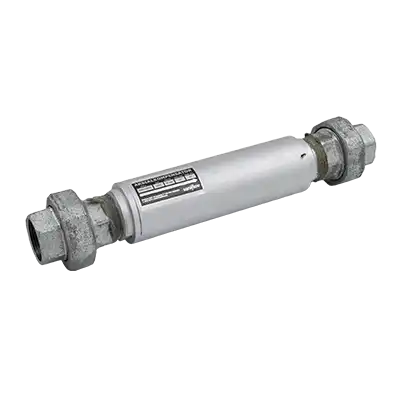
URU
Axial expansion joint
| Design: | Galvanised socket unions |
| Standard dimensions: | DN 15 – DN 50 |
| Max. working pressure: | PN 10 |
| Materials (Bellows): | Stainless steel |
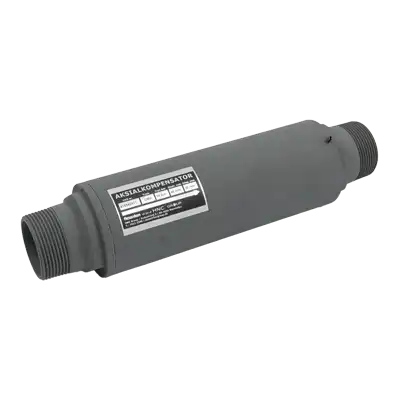
GRU
Axial expansion joint
| Design: | Nipples |
| Standard dimensions: | DN 15 – DN 54 |
| Max. working pressure: | PN 10 |
| Materials (Bellows): | Stainless steel |
Frequently asked questions about steel expansion joints
What is a steel expansion joint?
A steel expansion joint is a flexible component with corrugated stainless steel bellows, which absorbs movements, vibrations and thermal expansion in a piping system. It protects the pipes against overloading and extends the service life.
When should a steel expansion joint be used instead of a rubber expansion joint?
Steel expansion joints are typically used in systems with high pressure, high temperatures or chemically aggressive media. Where rubber expansion joints have their strength in flexibility and damping, steel expansion joints are far more robust in demanding environments.
What types of steel expansion joints are available?
The most common types are:
Which dimensions and pressure ratings can I get?
The standard range from STENFLEX covers from DN 15 to DN 5500 mm and pressures up to PN 16. For special tasks, specially designed solutions can be supplied.
Can steel expansion joints withstand vacuum?
Yes, certain models such as SG-10 and SG-11 are vacuum-tight and particularly suited to installations where both pressure and vacuum occur.
How long is the service life of a steel expansion joint?
STENFLEX steel expansion joints are designed for many years of operation under demanding conditions. The actual service life depends on correct sizing, installation conditions, pressure, temperature and type of medium.
Can you supply tailor-made expansion joints?
Yes. HNC Group offers special solutions where the expansion joint is adapted to your precise requirements in terms of diameter, pressure, temperature and movement.